

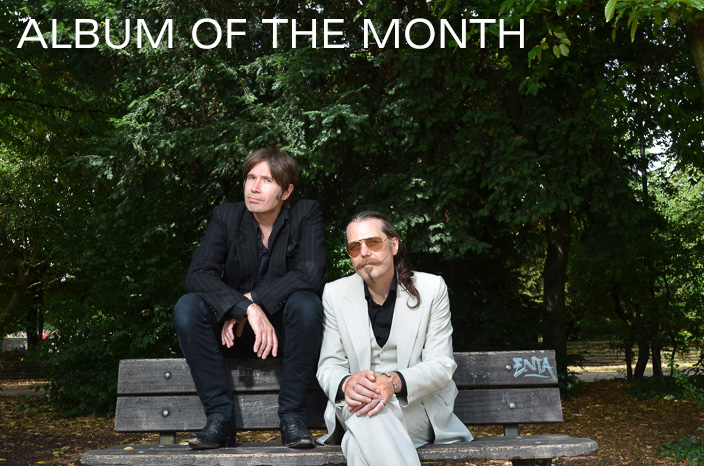
At the end of the 20th Century, as the world at large prepared for the ridiculous suggestion of apocalypse, the record industry coughed and spluttered. Having ridden high for several decades, great swathes of prestigious labels were being gobbled up by corporate behemoths. A&M Records, home to the band since 1987, had been absorbed into Interscope Geffen A&M Records in 1999, with many of the label’s staff laid off and roster members dropped.
Worldly wise and road-hardened, The Dels astutely bade their time.
Since their last studio album, 1997’s ‘Some Other Sucker’s Parade’, the band had penned roughly 70 new songs and were eager to get back into the studio long before the millennium. But in turbulent times, A&R man David Rose delayed, encouraging the band to wait until they had a hit song in the chamber, ready to fire.
Finally, in spring 2000, the band hit the studio with producers Bacon and Quarmby, who’d they’d worked with on ‘Cry To Be Found’. In search of a new sound for a new millennium, the band leaned in to new techniques and approaches to recording, recording digitally for the first time and using drum loops and samples. Those sessions yielded ‘Last Cheap Shot At The Dream’, ‘Buttons On My Clothes’ and ‘Baby It’s Me’.
Having tested the waters with the commercial sound of Bacon and Quarmby, the band turned next to the ‘no bullshit approach’ of old hand producer Pete Smith, having previously worked with him on Scotland’s 1998 World Cup Anthem ‘Don’t Come Home Too Soon’.
Summer sessions at London’s Livingstone Studios produced ‘Just Before You Leave’, ‘Just Getting By’ and ‘Drunk In A Band’, despite guitarist Kris Dollimore battling a nasty illness and general confusion at the complexity of the recording approach.
Finally, the band approached a third producer in the shape of ‘Commissioner’ Gordon Williams, a producer who had made his name working with rapper KRS-One and engineering and mixing a large part of ‘The Misseducation of Lauryn Hill’. Williams was to record the last six tracks and mix those from the sessions with Pete Smith and with Bacon and Quarmby. With a background in sampling and digital production, the band had expected another revolutionary approach to recording, but Williams’ inexperience with live bands in the studio resulted in something more classic rock in terms of style.
‘Can You Do Me Good?’, as a result, is one of the band’s most diverse and eclectic efforts to date. The long gestation period when it came to writing the material, combined with the various production approaches, delivers a madcap tour of the band’s vast and varying influences.